Wildlife Spotlight: koloa
Koloa maoli, or Hawaiian ducks, have been a part of the ecosystem of the Hawaiian Islands for tens of thousands of years. They were once found on all of the High Hawaiian Islands, except Lānaʻi. Today, koloa and their introduced “cousins”, the mallards, can continue to be seen in and around streams, ponds, marshes, loʻi kalo (taro ponds), and other freshwater areas across the State, where they eat seeds, mollusks and insects. However, it is important to be aware that most of the “Hawaiian ducks” one might see today, outside of the Island of Kauaʻi, are generally not genetically pure koloa.
Domestic mallards have been introduced into our island ecosystems by resorts, farmers and other community members who have brought them here as ornamental attractions and other uses – and many have been released into the wild and become feral. Hybridization occurs when two distinct species interbreed and produce fertile offspring. Domestic mallards are notoriously assertive and effective breeders, and have readily hybridized with our native koloa.
The Islands of Kauaʻi and Niʻihau provide very special and important habitats for the remaining genetically pure koloa. The loʻi kalo and carefully managed wetland ponds of Hanalei NWR, in particular, provide safe nesting and foraging areas that support the full life cycle requirements of this endangered native Hawaiian wetland bird. Today, 90% of the genetically pure koloa can be found within Hanalei NWR, and the Refuge team works actively to relocate any mallards that are spotted within these protected lands.
The primary nesting season for koloa runs through May, and we are already enjoying views of fluffy ducklings, as they emerge from nests across Hanalei NWR.
Koloa are medium-sized birds with mottled brown body feathers, iridescent green to blue wing bars, a spotted tail, and orange legs and feet. Their bill is dark greenish and can also feature an orange tip in some females. Koloa flush easily when disturbed and provide a delightful “quacking” sound as they take to flight, often in pairs.
In addition to the unique challenges of hybridization, like many native wetland bird species, koloa have also been threatened with extinction due to habitat loss, introduced predators such as feral cats and mongoose, and historic overhunting.
Please help all of our Hawaiian waterbirds by preserving wetland habitats, installing and maintaining septic tanks, keeping cats indoors and dogs leashed, and driving slowly near grassy wetland areas. For our koloa in particular, please do not release ducks into the wild and help us educate community members who raise ducks, or are thinking about buying one as a pet, that this activity creates yet another dangerous threat to an important species that needs our kōkua.
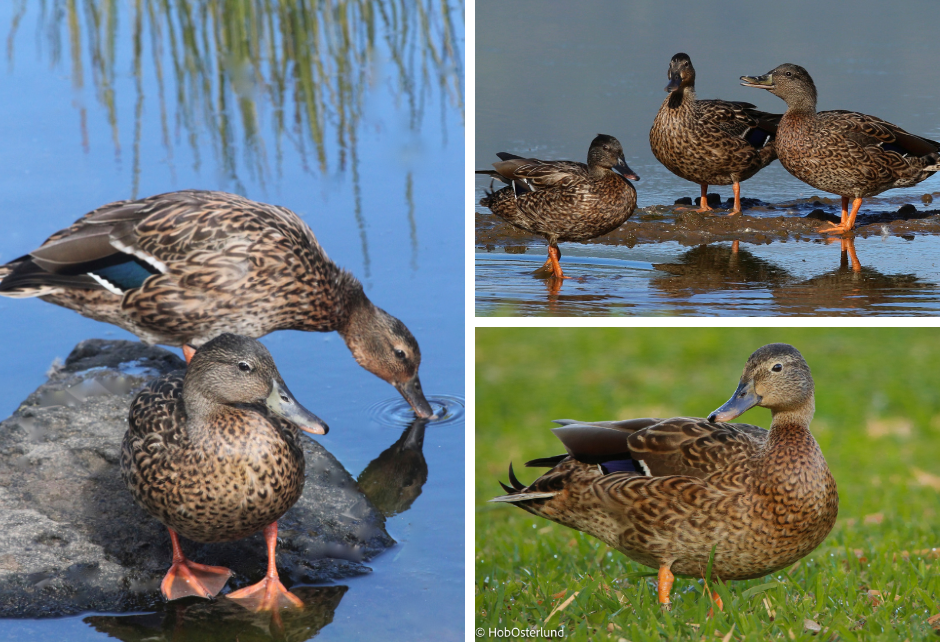
Photo Credit: Hob Osterlund, USFWS