

Wildlife Spotlight: nēnē
The nēnē, or Hawaiian goose, is the beloved State Bird of Hawaiʻi. Once common in all of the main Hawaiian Islands, by the early 1950’s only about 30 birds remained on Hawaiʻi Island. However, thanks to a captive breeding program and protections state-wide, their population has now increased to nearly 3,900 state-wide – representing a wonderful conservation success!
Here on Kauaʻi, our day-to-day experience of these exceptional birds is somewhat exceptional, as we currently have well over half of the entire state’s population of nēnē residing here. The main reason for this difference is part of what makes Kauaʻi so special. Thankfully, we do not have an established population of mongoose. These introduced predators predate on the eggs of all our State’s ground-nesting native wetland and seabirds, including the nēnē. Therefore, nēnē populations on other main Hawaiian Islands are much smaller and generally concentrated into protected areas, whereas our nēnē are able to thrive within our three national wildlife refuges, as well as on grasslands, golf courses, sparsely vegetated slopes and open lowland country across the Island of Kauaʻi.
Their vocalizations are similar to those of the Canada goose but are generally characterized by a low murmuring or "nay-nay" call, which lends them their name in ʻŌlelo Hawaiʻi.
Adult nēnē measure two feet in length and feature a black head and bill, tan cheeks, a tan neck with dark furrows, and partially webbed black feet. Over time, nēnē have exhibited an adaptation of a gradual reduction in the webbing between their toes and an increased upright posture, which enables them to walk more easily on land. This is very useful because, unlike other species of geese, nēnē do not migrate.
Makahiki is the primary nesting season for nēnē. However, their nesting season continues to get longer, and parents can now be seen with their goslings all the way from August through April. Nēnē nests are lined with down and usually well concealed under bushes, and they generally prefer to nest in the same area each year. The average clutch size is 3 eggs, with a range of up to 6 eggs, and the incubation period is 30 days, during which time the female will remain on the eggs while the male guards the nest site.
Nēnē goslings are flightless for about 10 to 14 weeks after hatching. Family groups begin flocking soon after the goslings are able to fly and remain in their breeding areas for about a month before beginning to venture further out. Then, between March and June, the adult nēnē will lose their flight feathers. These two phases leave the nēnē particularly vulnerable to predators and vehicles for a large part of the year. To help, please do not feed nēnē, keep your cats indoors and dogs leashed, and drive slowly near grassy areas – particularly now when mating behaviors cause the males to fight with one-another and can result in distracted birds drifting out into traffic.
The nēnē diet consists of grasses, seeds and herbs as well as leaves, buds, flowers and fruits. Nēnē also enjoy the spongy white berries of coastal naupaka and the keys of hala trees – providing wonderful views at Kīlauea Point NWR of nēnē enjoying a variety of “snacks.”
Nēnē are extremely vulnerable to predation and attacks by cats, dogs, rats, pigs and mongooses and continue to need our kōkua. However, thanks to the success of collaborative conservation efforts, in December 2019, the U.S. Fish and Wildlife Service downlisted nēnē from ‘endangered’ to ‘threatened’ under the Endangered Species Act.
Although they still have a long way to go, it is very encouraging to witness the success of this work and, at least here on the Island of Kaua‘i, we are now entering a new phase as we approach conversations around how we can learn to live together with a species that is rebounding.
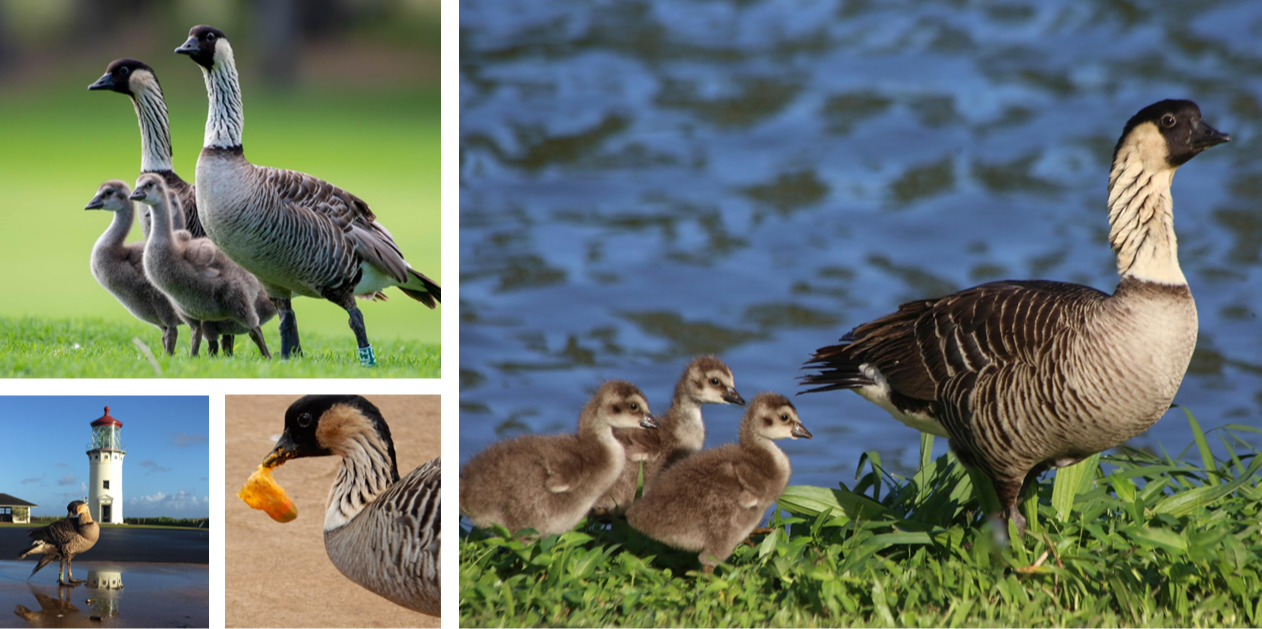
Photo Credit: Hob Osterlund
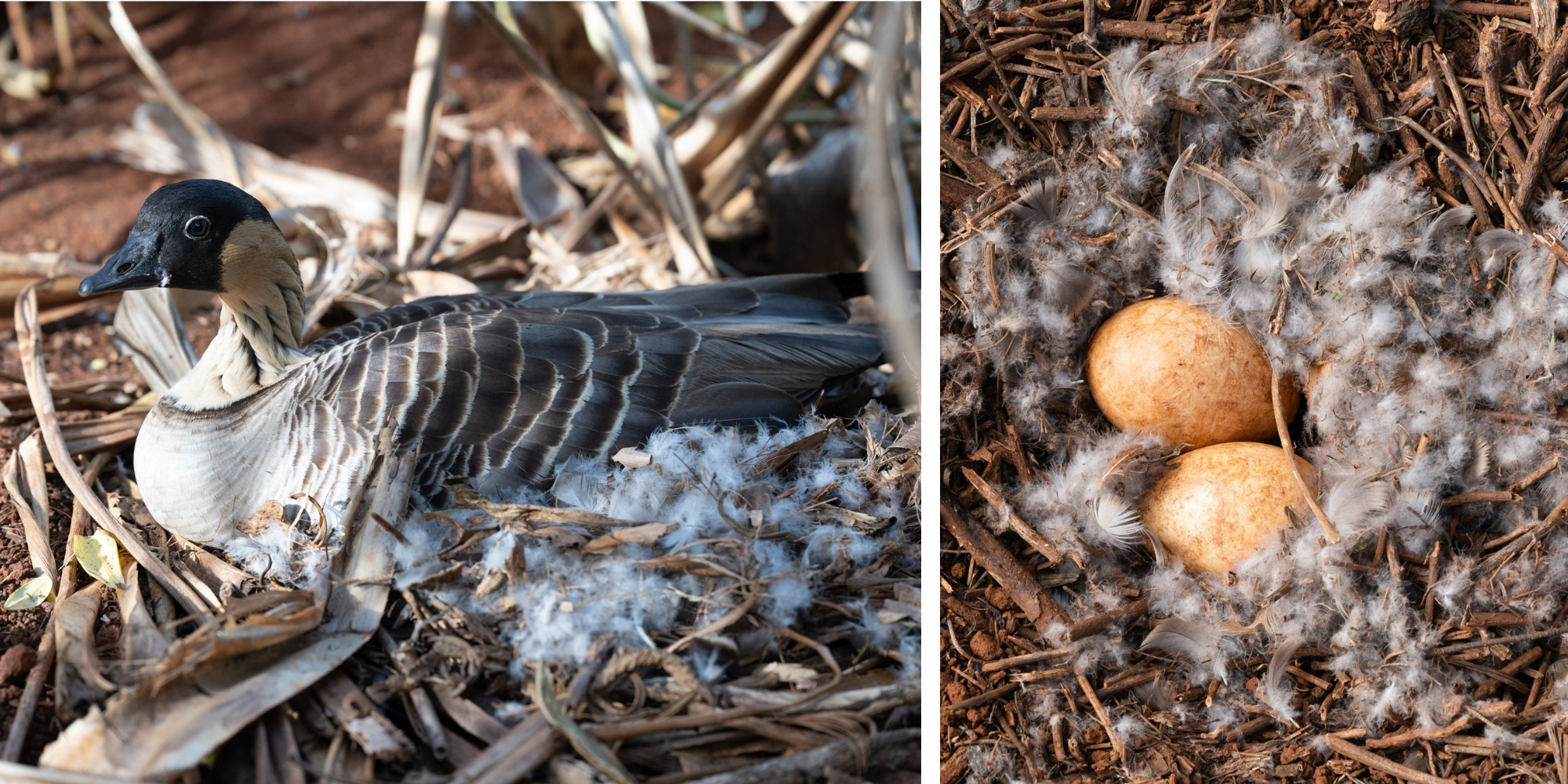
Photo Credit: Laurel Smith/USFWS