
Wildlife Spotlight: mōlī
As we already know, Kauaʻi is a very special place. One reason is that, with the exception of the U.S. Fish & Wildlife staff stationed at Kuaihelani (Midway Atoll), the North Shore of Kauaʻi is the only place in the world where mōlī (Laysan albatross) nest amongst a human population. This unique occurrence creates an opportunity for Refuge staff and volunteers, local citizen scientists, wildlife enthusiasts, and community members to revel in the sights, sounds and experiences provided by spending time in the presence of these magnificent seabirds.
The first mōlī of the nesting cycle, generally those already in an established mating pair and prior nesters, were spotted on Kauaʻi in early November. With their return, tender reunions and courtship behaviors ensued, quickly followed by mating and trips out to sea, while the females developed their eggs.
Mōlī are generally quite monogamous and delightfully affectionate with their mates. However, if one of the mates dies or proves to not be a good parenting partner, they will likely create a new pair bond in a subsequent nesting season. Mating and egg laying begins in mid-November and, like other seabirds, mōlī will lay only a single egg. If the egg is infertile or breaks during incubation, re-laying will not occur that year, reinforcing how precious each egg is to the future of the mōlī.
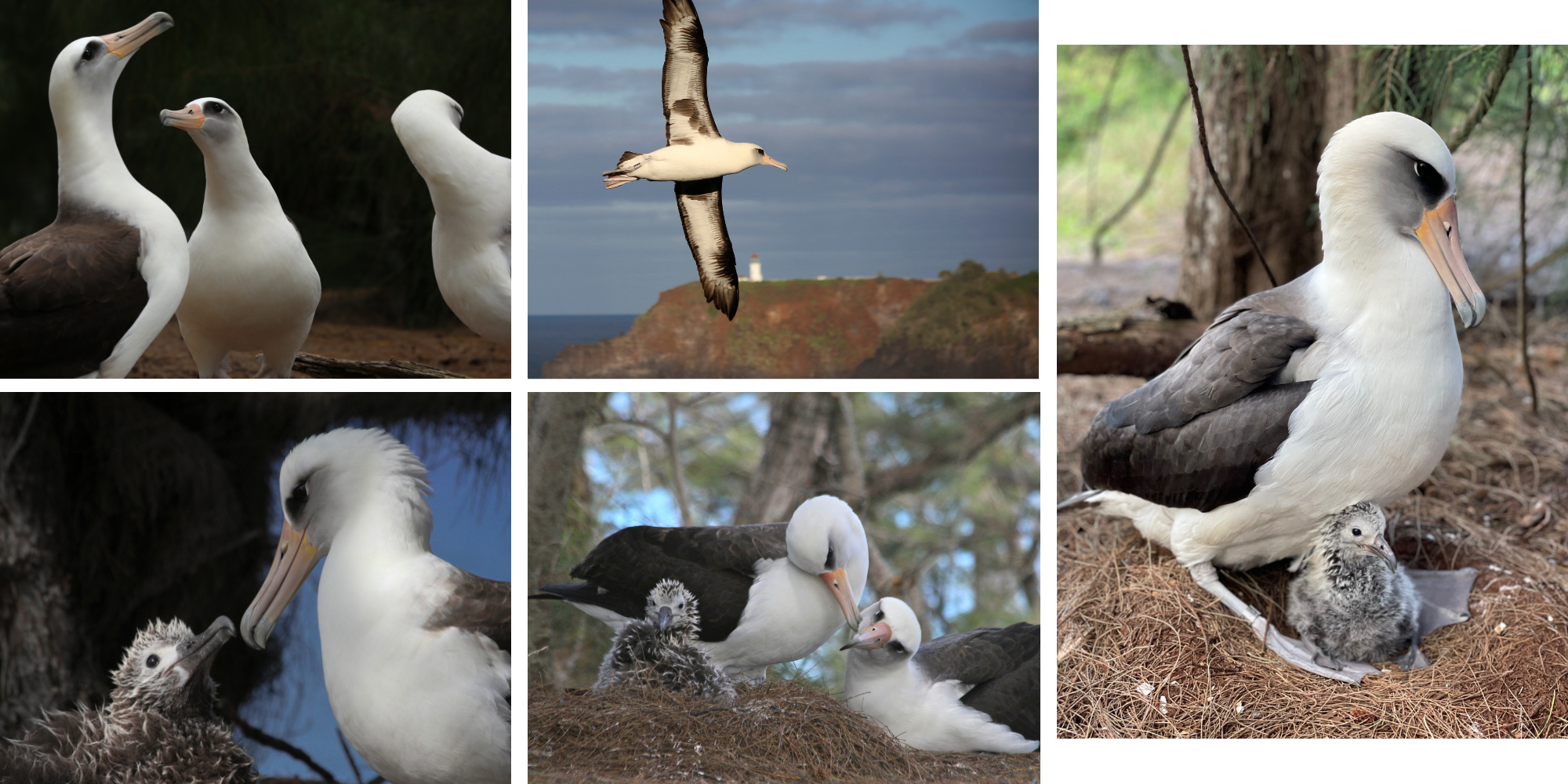
Photo Credit: Hob Osterlund, FKWR.
After laying her egg, the female will begin the incubation cycle, generally with a short 2-3 day span. The male then returns from sea and takes over incubation for as long as 3-4 weeks while his mate replenishes her energy, following the development of her large single egg. In total, incubation lasts about 65 days and duties will be shared by both parents as they take turns on the nest.
Chicks will hatch from late January to mid-February. Then both parents will continue to work together by feeding the chick a diet of regurgitated fish eggs, fish and squid oil – a diet that is rich in fatty acids and nutrients and helps each chick grow and develop quickly.
This year, within the two nesting colonies at Kīlauea Point NWR we have 195 nests. These figures have contributed to an island-wide record count across Kauaʻi, thanks to a community of passionate wildlife advocates who care.
The parents will alternate coverage and feeding cycles and remain with the chick for the first 1-2 weeks. Then the chick will be left alone in its nest while its parents continue to alternate foraging forays out at sea and feeding cycles. Often, a parent may return to its chick, feed it and then return to sea after as little as 10 minutes together.
Between mid-June and early August, after 5-6 months of development, the chicks will fledge. These adolescents will then spend the next 3-5 years alone at sea foraging across the vast waters of the Northern Pacific Ocean before returning to their original natal nesting site. Back on land, they will begin to participate in elaborate courtship dances and develop relationships that may lead to future mating pairs. Mating and first nesting usually occur around age 6-8, so there are often numerous non-mating “aunties” and “uncles” around the colony each year socializing and practicing their courtship rituals each season, particularly around February and March.
Nesting sites across the North Shore of Kauaʻi, including Kīlauea Point NWR, also participate in an exciting conservation program that seeks to reduce the population of mōlī nesting at the Pacific Missile Range Facility (PMRF), which has an aircraft runway and is unsafe, to nests on the North Shore of Kauaʻi. Fertile eggs from nests at PMRF are swapped out for infertile ones in safe nesting areas on the North Shore. The parents, many of which are female-female pairs, quickly accept the adopted egg and it is reared safely away from the aircraft of PMRF.
More than seventy percent of the world's mōlī population nests on Kuaihelani, a low-lying atoll located about 1,000 miles north of Kauaʻi. The atoll is designated as a National Wildlife Refuge and, this year, approximately 600,000 nests were counted. This extraordinary effort is coordinated by USFWS staff and conducted by incredible volunteers, including USFWS volunteers Louise Barnfield and Yuka Green.
More About Kuaihelani
This vast nesting colony is extremely vulnerable to the impacts of storms and sea level rise. However, thanks to higher elevations, Kauaʻi is considered an “ark” for the future safety of this and other ground-nesting species, but they need our kōkua. Mōlī are surface feeders and feed primarily at night – on anything that floats on the surface of the water including squid, fish, crustaceans and fish eggs. Unfortunately, this often includes marine debris as well. An estimated 5 tons of plastic is accidently fed to chicks each year.
Please help all of Hawaiʻi’s seabirds by keeping your cat indoors and dogs on a leash, pick up trash and debris while enjoying our beaches, and please reduce your use of single-use plastic products.
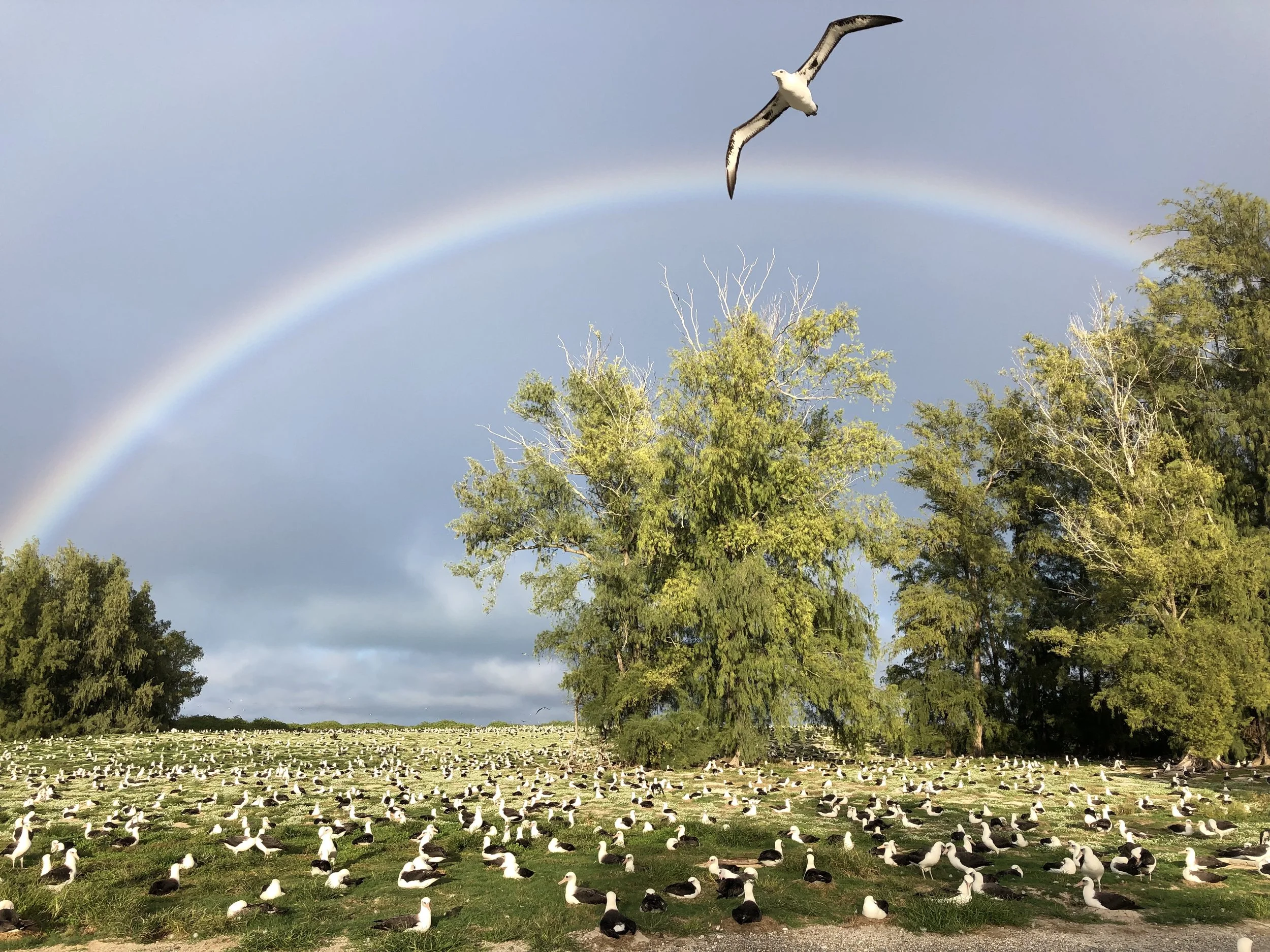
Photo: Mōlī nesting on Kuaihelani, Credit: Louise Barnfield/USFWS.
Want to experience more?
Check out the new Kuaihelani Live Cam.
Enjoys views of mōlī on our YouTube Channel. Mōlī dance, clack, call and “sky moo” as part of their delightful courtship rituals.
Enjoy a blog entitled, “Another Bumper Crop OʻTross,”,by Safina Center Conservationist-in-Residence Hob Osterlund
Visit the Kauaʻi Albatross Network to learn more about mōlī.